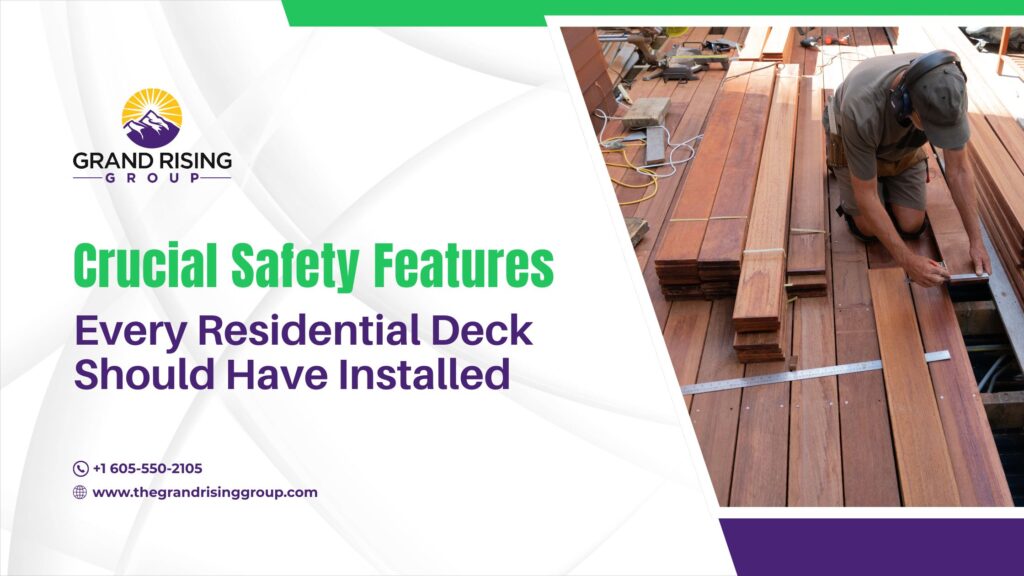

A residential deck can be one of the most enjoyable areas of a home, providing a space for outdoor dining, entertaining, relaxation, and family gatherings. While aesthetics and comfort are often top priorities during deck design, safety should never be overlooked. Installing the right deck safety features helps protect family members, guests, and pets while ensuring the structure remains secure and functional for years to come.
Every year, thousands of deck related accidents occur due to structural failures, loose railings, damaged stairs, poor lighting, and neglected maintenance. Fortunately, many of these incidents can be prevented by incorporating essential safety measures during construction and maintaining them properly over time.
In this guide, we will explore the most important deck safety features that every residential deck should include to create a safer outdoor living environment.
Secure Railings
One of the most important deck safety features is a strong and properly installed railing system.
Railings help prevent falls, especially on elevated decks. Building codes typically establish minimum railing height requirements to improve safety. Railings should be sturdy, securely fastened, and capable of withstanding regular use without movement or instability.
Routine inspections help ensure railings remain in good condition over time.
Safe Stair Design
Stairs are a critical component of many residential decks and should be designed with safety in mind.
Among the most essential deck safety features are properly constructed stairs with consistent tread depth and riser height. Uneven steps can increase the risk of trips and falls.
Well designed stairs make it easier and safer for people of all ages to access the deck.
Handrails for Stairways
Handrails provide additional support and stability when navigating stairs.
Effective deck safety features include handrails that are securely attached and positioned at an appropriate height. Handrails help reduce the risk of slips and falls, particularly during wet weather or low light conditions.
They are especially valuable for children, older adults, and individuals with mobility challenges.
Adequate Lighting
Proper illumination is one of the most overlooked deck safety features.
Deck lighting improves visibility during evening hours and helps prevent accidents caused by poor visibility. Stair lighting, pathway lighting, post cap lights, and recessed deck lights can all contribute to a safer outdoor environment.
Lighting also enhances the appearance and usability of the deck after sunset.

Slip Resistant Decking Surfaces
Deck surfaces can become slippery when exposed to rain, snow, or moisture.
Installing slip resistant materials is one of the most practical deck safety features available. Many modern decking products are designed to provide improved traction even when wet.
Regular cleaning also helps reduce the accumulation of algae, mold, and debris that can create slippery conditions.
Strong Structural Components
The overall strength of the deck depends on the quality of its structural components.
Critical deck safety features include properly sized beams, joists, support posts, connectors, and footings. These elements work together to safely support the weight of people, furniture, and outdoor equipment.
A structurally sound deck provides the foundation for all other safety measures.
Proper Fasteners and Connectors
Metal connectors and fasteners play a vital role in maintaining deck stability.
High quality deck safety features include corrosion resistant screws, bolts, brackets, and joist hangers that are designed for outdoor use. Inferior or deteriorated hardware can compromise structural integrity over time.
Regular inspections help identify worn or damaged connectors before problems develop.
Secure Deck Attachment
For attached decks, the connection between the deck and the house is one of the most important structural considerations.
Properly installed ledger boards are essential deck safety features that help transfer loads safely and prevent separation from the home. Improper attachment is a common cause of deck failures.
Professional installation and routine inspections help ensure a secure connection.
Child and Pet Safety Measures
Families with children and pets should consider additional deck safety features.
Baluster spacing should be narrow enough to prevent children or pets from slipping through railing openings. Gates at stairways can provide an extra layer of protection.
These measures help create a safer environment for all household members.
Drainage and Water Management
Effective drainage contributes significantly to deck safety and longevity.
One of the often overlooked deck safety features is proper water management. Standing water can accelerate wood rot, encourage mold growth, and create slippery surfaces.
Ensuring water drains away from the deck helps preserve both safety and structural integrity.
Fire Safety Considerations
Many homeowners use grills, fire pits, and outdoor heaters on their decks.
Important deck safety features include maintaining proper clearance around heat sources and following manufacturer guidelines for safe operation. Fire resistant mats and protective barriers can help reduce potential hazards.
Practicing safe outdoor cooking habits further improves safety.
Routine Inspections and Maintenance
Even the best deck safety features require regular maintenance.
Homeowners should inspect their decks periodically for loose railings, damaged boards, rusted hardware, and signs of structural deterioration. Addressing minor issues early can help prevent larger and more expensive problems later.
Routine maintenance is one of the most effective ways to preserve deck safety.
Compliance With Building Codes
Local building codes are designed to promote safe construction practices.
Following code requirements ensures that essential deck safety features are included and installed correctly. Building codes typically address railings, stairs, structural components, load capacity, and other important safety elements.
Compliance provides added confidence in the safety of the finished structure.
Benefits of Prioritizing Deck Safety
Investing in deck safety features offers numerous benefits.
Homeowners can reduce accident risks, improve usability, protect property value, and enjoy greater peace of mind. A safe deck creates a more comfortable environment for family gatherings, outdoor entertaining, and everyday relaxation.
Safety improvements often contribute to long term durability as well.
Final Thoughts
Installing essential deck safety features is one of the most important responsibilities of any homeowner with an outdoor deck. From secure railings and proper lighting to strong structural components and slip resistant surfaces, every safety feature plays a role in protecting those who use the space.
By following building codes, conducting routine inspections, and addressing maintenance needs promptly, homeowners can significantly reduce risks and extend the life of their decks. A safe deck not only enhances outdoor enjoyment but also provides lasting confidence that family and guests can gather comfortably and securely.
Prioritizing safety today helps ensure many years of worry free outdoor living.
FAQs
1. What are the most important deck safety features?
Secure railings, sturdy stairs, proper lighting, slip resistant surfaces, and strong structural components are among the most important features.
2. Why are deck railings important?
Railings help prevent falls and improve safety on elevated decks.
3. How often should a deck be inspected?
Most experts recommend inspecting decks at least once or twice per year.
4. Can lighting improve deck safety?
Yes, adequate lighting reduces trip hazards and improves visibility during evening use.
5. What makes a deck surface safer?
Slip resistant decking materials and regular cleaning help improve traction.
6. Why are handrails necessary?
Handrails provide stability and support when using stairs.
7. How does drainage affect deck safety?
Proper drainage reduces moisture related damage and helps prevent slippery conditions.
8. Should deck safety features follow building codes?
Yes, building codes establish important safety standards that help protect homeowners and guests.