
A kitchen backsplash is much more than a protective wall covering. It is one of the most noticeable design features in any kitchen and can completely transform the room’s appearance. Whether you’re planning a complete kitchen remodel or simply refreshing your existing space, choosing the right kitchen backsplash helps create a stylish, functional, and cohesive design.
From classic subway tiles and natural stone to modern glass panels and bold mosaic patterns, today’s kitchen backsplash options offer endless possibilities. The right backsplash not only protects your walls from moisture and cooking splashes but also adds personality and value to your home.
This guide explores practical tips to help you choose the perfect kitchen backsplash that matches your style.
Why a Kitchen Backsplash Is Important
A well-designed kitchen backsplash combines beauty with functionality.
It protects walls from grease, water, and food splashes while adding texture, color, and visual interest to your kitchen. A quality backsplash also makes cleaning easier and enhances your home’s overall value.
The right backsplash ties the entire kitchen together.
Match Your Kitchen Style
Your kitchen backsplash should complement your overall kitchen design.
Modern kitchens often feature sleek glass or large-format tiles, while farmhouse kitchens pair beautifully with subway tiles or natural stone. Traditional kitchens often look best with classic ceramic or marble finishes.
A coordinated design creates a polished appearance.
Choose the Right Material
Material selection is one of the most important kitchen backsplash decisions.
Popular options include ceramic tile, porcelain tile, glass, marble, granite, natural stone, stainless steel, and peel-and-stick panels. Choose a material that suits both your design preferences and maintenance needs.
Durable materials provide long-lasting beauty.
Select a Color Palette
Color plays a major role in your kitchen backsplash design.
Neutral shades such as white, gray, beige, and cream offer timeless appeal, while bold colors can create a striking focal point. Coordinate your backsplash with your cabinets, countertops, and flooring.
Balanced colors create visual harmony.
Consider Tile Size
Tile size influences the overall appearance of your kitchen backsplash.
Large tiles create a clean, modern look with fewer grout lines, while smaller mosaic tiles add texture and decorative detail.
Choose a size that fits your kitchen’s scale.
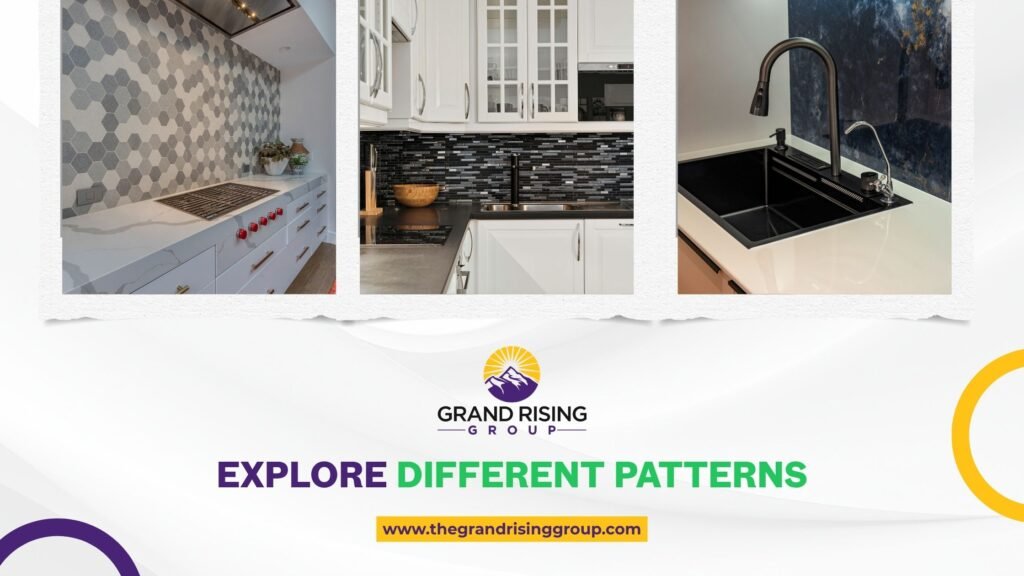
Explore Different Patterns
Patterns can personalize your kitchen backsplash.
Popular layouts include subway, herringbone, chevron, basket weave, vertical stack, and geometric designs that add visual interest without overwhelming the space.
Creative patterns elevate the design.
Coordinate with Countertops
Your kitchen backsplash should complement your countertops.
If your countertops have bold patterns, choose a simple backsplash. If your countertops are solid, a more decorative backsplash can create a beautiful focal point.
Balance keeps the kitchen visually appealing.
Think About Maintenance
Maintenance is an important factor when selecting a kitchen backsplash.
Smooth materials such as glass and porcelain are easy to clean, while natural stone may require periodic sealing to maintain its appearance.
Choose materials that fit your lifestyle.
Add Under-Cabinet Lighting
Lighting enhances every kitchen backsplash.
Under-cabinet LED lighting highlights tile textures, brightens workspaces, and creates a warm atmosphere throughout the kitchen.
Proper lighting showcases your backsplash beautifully.
Stay Timeless
While trends come and go, a timeless kitchen backsplash offers long-term value.
Neutral colors, simple tile patterns, and quality materials remain attractive for years and adapt easily to future décor changes.
Classic designs never go out of style.
Work Within Your Budget
A beautiful kitchen backsplash is available for nearly every budget.
Compare different materials, installation costs, and maintenance requirements before making your final decision.
Careful planning helps maximize value.
Conclusion
Choosing the right kitchen backsplash is one of the easiest ways to enhance both the beauty and functionality of your kitchen. By selecting materials, colors, patterns, and finishes that complement your home’s style, you can create a space that feels cohesive, practical, and inviting.
Whether you prefer classic subway tiles, elegant natural stone, or modern glass panels, a thoughtfully designed kitchen backsplash will protect your walls while serving as a beautiful focal point for years to come.
FAQs
1. What is the best material for a kitchen backsplash?
Ceramic, porcelain, glass, natural stone, marble, and stainless steel are among the most popular choices.
2. Should my kitchen backsplash match my countertops?
They should complement each other rather than match exactly to create a balanced design.
3. What color kitchen backsplash is timeless?
White, gray, beige, cream, and soft neutral tones remain popular and versatile.
4. Are large tiles better for a kitchen backsplash?
Large tiles create a modern appearance with fewer grout lines, making them easier to clean.
5. Is a kitchen backsplash necessary?
Yes. It protects your walls from moisture, grease, and stains while enhancing the overall appearance of your kitchen.
6. What backsplash pattern is most popular?
Subway tile, herringbone, chevron, and stacked tile layouts continue to be popular choices.
7. How high should a kitchen backsplash be?
Most backsplashes extend from the countertop to the bottom of the upper cabinets, although full-height backsplashes are increasingly popular.
8. How do I choose the right kitchen backsplash?
Consider your kitchen style, countertop material, cabinet color, maintenance preferences, budget, and overall home décor before making your decision.