
A finished basement can transform an underused lower level into one of the most comfortable and functional spaces in a home. Whether used as a family room, entertainment area, guest suite, home office, or fitness room, a properly finished basement adds value, comfort, and extra living space. However, many homeowners wonder what makes a basement finished and how to create a warm and inviting atmosphere that feels like a natural extension of the home.
A finished basement involves more than simply covering concrete walls or installing flooring. It requires careful planning, insulation, moisture control, lighting, ventilation, and design features that improve comfort and usability. The goal is to create a space that feels safe, welcoming, and fully integrated with the rest of the house.
In this guide, we will explore the most important features that explain what makes a basement finished while helping homeowners design cozy and practical basement spaces.
Proper Wall Finishing
One of the first answers to what makes a basement finished is properly finished walls. Bare concrete walls create a cold and unfinished appearance, while finished walls improve both comfort and aesthetics.
Drywall installation is one of the most common basement finishing methods because it creates a clean and polished look similar to upper level living spaces. Moisture resistant drywall is especially important in basements to help reduce the risk of mold and water damage.
Well finished walls also improve insulation and sound control throughout the basement.

Comfortable Flooring
Flooring plays a major role in determining what makes a basement finished and comfortable. Basement floors should provide warmth, durability, and moisture resistance.
Luxury vinyl flooring, laminate flooring, carpet tiles, and engineered hardwood are popular choices for finished basements. These materials improve comfort while helping the basement feel more inviting and livable.
Adding rugs or carpeting can further increase warmth and create a cozy atmosphere.
Effective Moisture Control
Moisture management is one of the most important factors in understanding what makes a basement finished properly.
Basements are naturally more vulnerable to humidity, condensation, and water intrusion. Waterproofing walls, sealing cracks, and installing sump pumps or drainage systems help protect the finished space from damage.
Dehumidifiers and proper ventilation also help maintain healthier humidity levels and prevent mold growth.
Proper Insulation
Good insulation is another essential feature related to what makes a basement finished and energy efficient.
Basement insulation helps regulate indoor temperatures, reduce moisture buildup, and improve overall comfort. Insulated walls and ceilings also reduce noise transfer between floors.
Foam board insulation and spray foam insulation are common choices because they provide both thermal protection and moisture resistance.
Adequate Lighting
Lighting significantly affects how finished and welcoming a basement feels. One key part of what makes a basement finished is creating bright and balanced lighting throughout the space.
Since basements often have limited natural light, layered lighting becomes especially important. Recessed lighting, floor lamps, wall sconces, and under cabinet lighting help brighten dark areas and create a more open atmosphere.
Warm lighting tones can also make basements feel more relaxing and comfortable.
Heating and Cooling Systems
Temperature control is another important factor when discussing what makes a basement finished and usable year round.
A finished basement should have reliable heating and cooling to maintain consistent comfort. Extending the home’s HVAC system or installing separate climate control solutions helps regulate basement temperatures.
Proper airflow and ventilation also improve indoor air quality and prevent stale or damp conditions.
Finished Ceilings
Ceilings are often overlooked, but they are an important part of what makes a basement finished visually complete.
Exposed pipes, wiring, and ductwork may create an unfinished industrial appearance. Installing drywall ceilings or suspended ceiling systems improves the overall design and creates a cleaner look.
Ceiling finishes also help with insulation and sound reduction between levels of the home.
Functional Storage Solutions
Storage is another valuable feature when considering what makes a basement finished and practical.
Built in shelves, storage cabinets, closets, and hidden storage areas help keep the basement organized and clutter free. Functional storage allows homeowners to maximize usable space without sacrificing comfort or design.
Well planned storage also helps the basement remain flexible for multiple uses.
Cozy Furniture and Decor
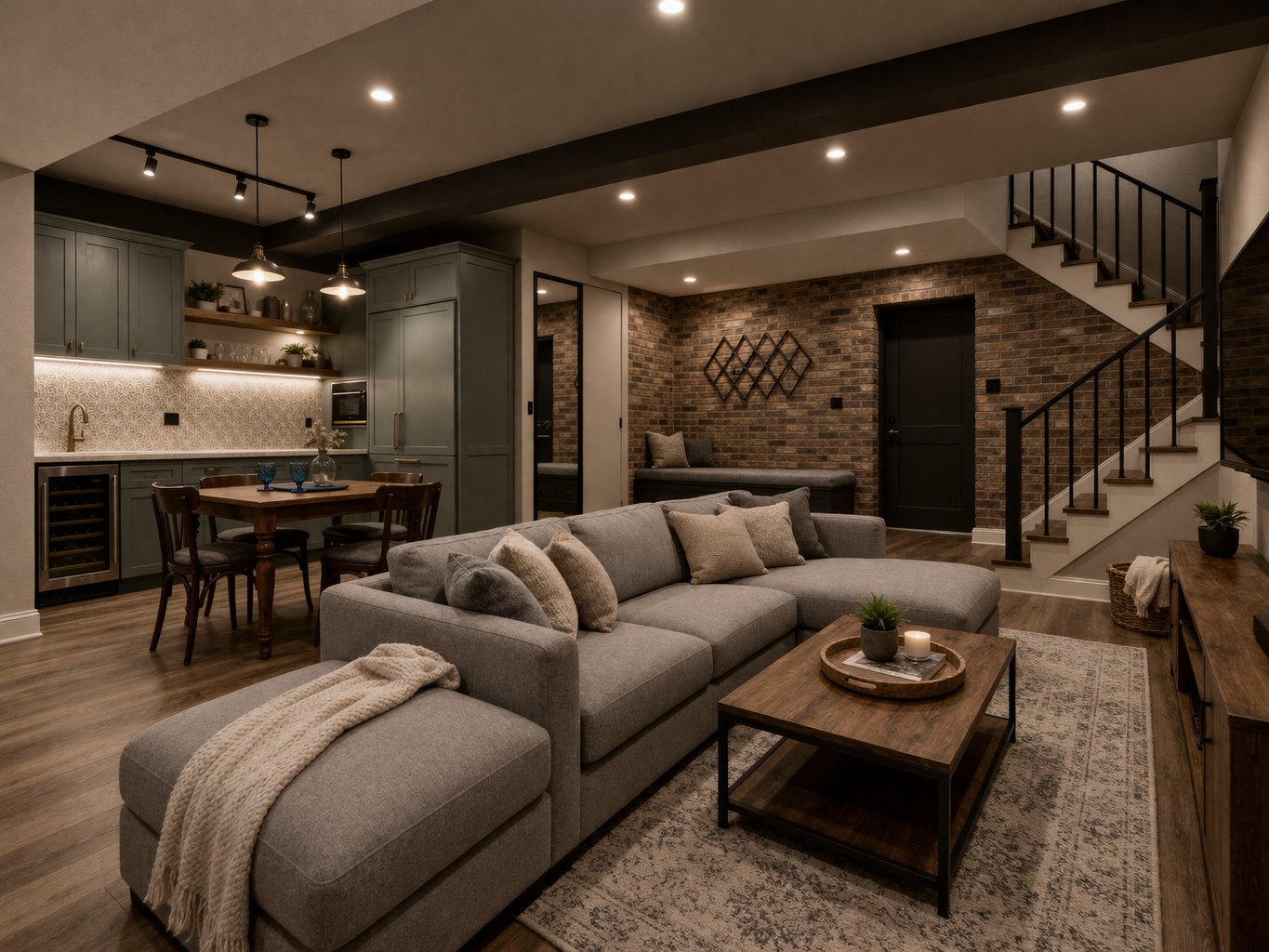
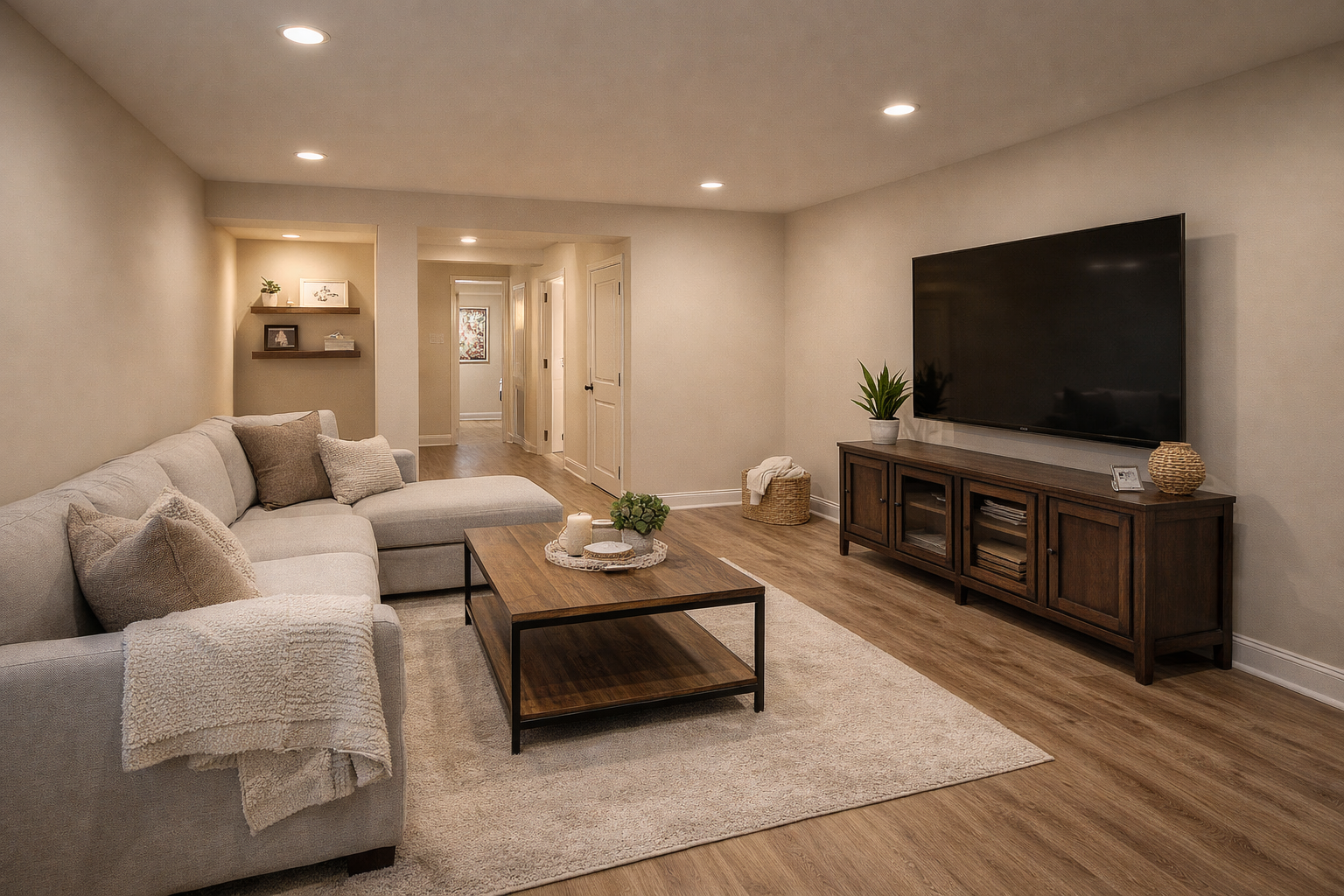
Furniture and decor play a major role in creating warmth and comfort. One important part of what makes a basement finished is making the space feel inviting and connected to the rest of the home.
Soft seating, area rugs, throw blankets, decorative lighting, and wall art all contribute to a cozy environment. Choosing warm colors and comfortable furniture helps reduce the cold feeling often associated with unfinished basements.
Thoughtful decor transforms the basement into a relaxing and enjoyable living space.
Entertainment and Functional Areas
A finished basement often includes designated areas for entertainment or daily activities. Another important answer to what makes a basement finished is functionality.
Home theaters, game rooms, offices, gyms, guest bedrooms, or playrooms all increase basement usability. Creating functional zones helps homeowners maximize the value and purpose of the space.
Flexible layouts allow basements to adapt to changing household needs over time.
Safety Features
Safety is essential when discussing what makes a basement finished properly. Finished basements should include proper electrical work, smoke detectors, carbon monoxide detectors, and emergency exits when required.
Egress windows are especially important for basement bedrooms because they provide emergency escape routes and additional natural light.
Professional construction and code compliance help ensure basement safety and long term reliability.
Final Thoughts
Understanding what makes a basement finished involves more than simply adding drywall and flooring. A truly finished basement combines comfort, moisture protection, insulation, lighting, ventilation, and functional design to create a warm and usable living space.
Proper planning and quality materials help transform basements into comfortable extensions of the home that support relaxation, entertainment, work, and family activities. From cozy furniture and storage solutions to lighting and climate control, every feature contributes to a finished and inviting atmosphere.
With the right design approach, homeowners can create beautiful basement spaces that improve both comfort and property value for years to come.
FAQs
1. What makes a basement finished?
what makes a basement finished includes drywall, flooring, insulation, lighting, climate control, and moisture protection.
2. Why is moisture control important in basements?
Moisture control helps prevent mold, water damage, and poor indoor air quality.
3. What flooring works best in finished basements?
Luxury vinyl, laminate, carpet tiles, and engineered hardwood are popular basement flooring options.
4. Do finished basements need insulation?
Yes, insulation improves comfort, energy efficiency, and moisture control.
5. Why is lighting important in basements?
Good lighting helps basements feel brighter, warmer, and more inviting.
6. Should finished basements have heating and cooling?
Yes, climate control is important for maintaining comfortable temperatures year round.
7. What type of drywall should be used in basements?
Moisture resistant drywall is recommended to reduce the risk of mold and damage.
8. Can finished basements increase home value?
Yes, finished basements often add usable living space and improve property value.